Custom Software vs. Off-the-Shelf in 2026: The Complete Build vs. Buy Decision Framework & TCO Guide
Custom Software vs. Off-the-Shelf in 2026: The Complete Build vs. Buy Decision Framework & TCO Guide
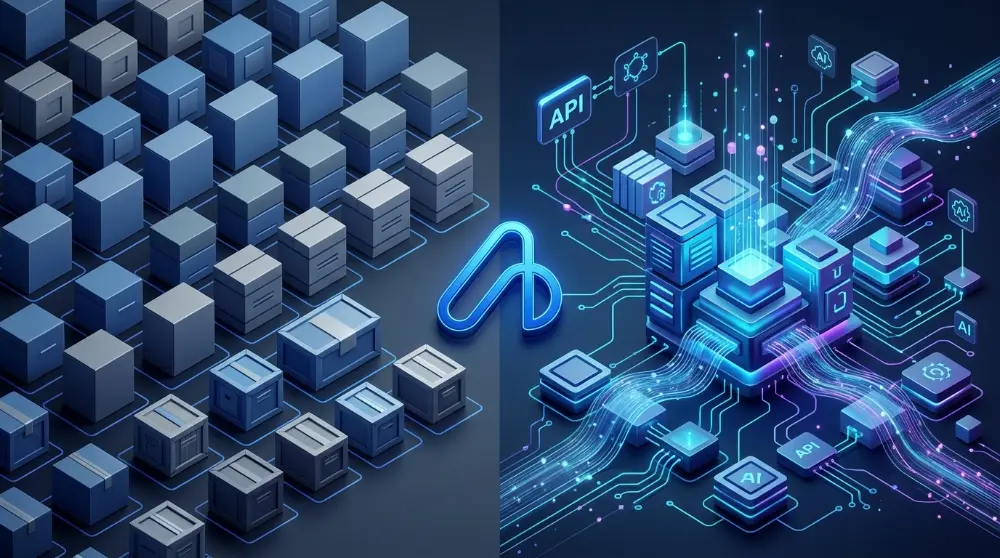
At first, a patchwork of off-the-shelf software and standard SaaS subscriptions seems like a sensible choice. You sign up for an enterprise CRM, plug in a third-party project management platform, subscribe to an automated billing tool, and stitch them all together with third-party webhooks.
For the first twelve months, it works. But as your transaction volume doubles, team headcount expands, and proprietary workflows mature, that convenient SaaS stack begins to creak.
Seat licenses climb into thousands of dollars each month. Critical data fragments across four isolated databases. Your engineering team spends more hours fixing broken third-party API syncs than shipping customer-facing features. Worst of all, your business processes are forced to contort around someone else’s rigid software architecture.
This brings leadership to a critical crossroads: Should you keep renting commercial off-the-shelf (COTS) software, or invest in custom software development tailored precisely to your operations?
In 2026, with modern cloud primitives, headless frameworks, and AI-accelerated engineering radically lowering the barrier to custom builds, the math behind the build vs. buy debate has shifted. Here is an engineer-grounded decision framework, a true Total Cost of Ownership (TCO) analysis, and the architectural criteria you need to make the right call.
What Is the Core Difference?
- Off-the-Shelf Software (COTS): Pre-packaged, ready-to-deploy software built for the mass market. It solves common, standardized problems (e.g., Salesforce, QuickBooks, HubSpot, Shopify). You pay via recurring monthly or annual licenses per user seat, but you have zero control over the underlying codebase, product roadmap, or data architecture.
- Custom Software Development: Purpose-built, bespoke software engineered specifically around your company’s unique business logic, compliance boundaries, and competitive advantages. You maintain 100% code ownership, direct database control, and zero recurring seat-licensing fees.
The Hidden Costs of "Cheap" Off-the-Shelf Tools
Off-the-shelf tools look inexpensive on paper because the upfront entry ticket is low. A $60/user/month tier sounds reasonable—until your company scales.
- Off-the-Shelf Software (COTS): Pre-packaged, ready-to-deploy software built for the mass market. It solves common, standardized problems (e.g., Salesforce, QuickBooks, HubSpot, Shopify). You pay via recurring monthly or annual licenses per user seat, but you have zero control over the underlying codebase, product roadmap, or data architecture.
- Custom Software Development: Purpose-built, bespoke software engineered specifically around your company’s unique business logic, compliance boundaries, and competitive advantages. You maintain 100% code ownership, direct database control, and zero recurring seat-licensing fees.
Off-the-shelf tools look inexpensive on paper because the upfront entry ticket is low. A $60/user/month tier sounds reasonable—until your company scales.
1. Subscription Bloat & The "Feature Tax"
Commercial SaaS vendors maximize revenue by gating their most critical capabilities—such as SSO (Single Sign-On), audit logs, custom role-based permissions, and high-frequency API rate limits—behind expensive "Enterprise" tiers. A team scaling from 20 to 150 members often sees software overhead skyrocket from $1,200/month to over $20,000/month for tools where 70% of the bundled features remain untouched.
2. Integration Fragility and Middleware Lock-In
Off-the-shelf applications rarely play nicely out of the box with your legacy databases or bespoke ERPs. Bridging these gaps requires fragile middleware, custom webhooks, or manual CSV uploads. When a SaaS vendor changes their REST API version or deprecates an endpoint, your internal pipelines stall.
3. Data Sovereignty and AI Restrictions
With regional data regulations like the Digital Personal Data Protection (DPDP) Act, GDPR, and HIPAA, storing sensitive customer records on shared multi-tenant SaaS clouds introduces legal exposure. Furthermore, when you rent software, you cannot easily train private, proprietary AI models or autonomous agents on your own clean operational data.
When Does Off-the-Shelf Still Win?
Custom software is not a silver bullet for every operational need. Building software makes little financial or strategic sense if:
The function is a non-differentiating utility: Accounting, payroll, and standard email delivery do not give your company a competitive edge. Use QuickBooks, Stripe, or Google Workspace.
You need deployment within 48 hours: Custom software requires discovery, architectural prototyping, and iterative testing. If you must be operational by Friday, buy pre-built tools.
Your business model is still unproven: Pre-revenue startups validating basic market fit should leverage no-code tools and off-the-shelf platforms before writing bespoke codebases.
Investing in custom software development shifts from a luxury to an operational necessity under these specific conditions:
Your workflow is your moat: If your business succeeds because of a proprietary logistics algorithm, unique fintech underwriting methodology, or specialized manufacturing workflow, off-the-shelf software forces you to operate like your competitors.
Complex multi-system integrations: When your staff wastes hundreds of manual hours every month copying data across disparate platforms, building a unified custom portal or custom CRM eliminates manual overhead and human error.
Escalating seat-licensing costs: When your annual SaaS licensing bill exceeds the one-time development and maintenance cost of building your own platform, a custom build offers a definitive return on investment.
Strict security, IP, and data ownership: High-trust sectors—including healthcare, banking, real estate, and government contracting—frequently demand full code ownership, custom encryption keys, and isolated database deployments.
Consider a mid-sized services or logistics firm with 80 internal users and 2,000 client portal accounts:
Path A: Commercial Enterprise SaaS Stack
80 internal enterprise licenses @ $120/user/month: $115,200/year
2,000 client portal seats / API volume add-ons: $24,000/year
Custom connector licenses & middleware tools: $10,800/year
Annual vendor price increases (~8% annually): Compounding
Total 3-Year Expenditure: ~$480,000+ (with zero equity or software IP built).
80 internal enterprise licenses @ $120/user/month: $115,200/year
2,000 client portal seats / API volume add-ons: $24,000/year
Custom connector licenses & middleware tools: $10,800/year
Annual vendor price increases (~8% annually): Compounding
Total 3-Year Expenditure: ~$480,000+ (with zero equity or software IP built).
Path B: Engineered Custom Web Application
Discovery, UX design, and MVP development: $65,000 – $95,000
Phase 2 custom integrations & automated reporting: $25,000
Cloud hosting (AWS/GCP serverless) & maintenance: $14,400/year
Total 3-Year Expenditure: ~$135,000 – $165,000
Net 3-Year Savings: Over $300,000, with full ownership of a proprietary digital asset.
How AI Changes the Equation in 2026Historically, the biggest critique of custom software was prolonged delivery timelines. Building enterprise software once took 12 to 18 months.
Modern custom software engineering has been revolutionized by:
AI-Accelerated Code Generation & Automated Testing: Senior engineering teams use AI to automate boilerplate code, unit test suites, and schema migrations, cutting production cycles by 40–50%.
Modern Modular Frameworks: Utilizing battle-tested frameworks like Next.js, Node.js microservices, and serverless edge databases means developers don't reinvent authentication or routing—they focus directly on your core business logic.
Tailored AI Chatbots & Agents: Rather than paying for generic third-party AI plug-ins, custom software lets you embed proprietary AI copilots directly into your operational software, automating routine workflows safely inside your firewalls.
Discovery, UX design, and MVP development: $65,000 – $95,000
Phase 2 custom integrations & automated reporting: $25,000
Cloud hosting (AWS/GCP serverless) & maintenance: $14,400/year
Total 3-Year Expenditure: ~$135,000 – $165,000
Net 3-Year Savings: Over $300,000, with full ownership of a proprietary digital asset.
Historically, the biggest critique of custom software was prolonged delivery timelines. Building enterprise software once took 12 to 18 months.
Modern custom software engineering has been revolutionized by:
AI-Accelerated Code Generation & Automated Testing: Senior engineering teams use AI to automate boilerplate code, unit test suites, and schema migrations, cutting production cycles by 40–50%.
Modern Modular Frameworks: Utilizing battle-tested frameworks like Next.js, Node.js microservices, and serverless edge databases means developers don't reinvent authentication or routing—they focus directly on your core business logic.
Tailored AI Chatbots & Agents: Rather than paying for generic third-party AI plug-ins, custom software lets you embed proprietary AI copilots directly into your operational software, automating routine workflows safely inside your firewalls.
The Build vs. Buy Scorecard: How to Decide
To evaluate your next software initiative, run your requirements through this 4-step checklist:
Strategic Value: Does this system directly impact why clients choose you over competitors? (Yes = Build | No = Buy)
Process Standardization: Can your team adapt its workflow to a generic industry standard without losing revenue or efficiency? (Yes = Buy | No = Build)
Breakeven Horizon: Will your projected SaaS subscription fees over 36 months surpass the estimated build cost? (Yes = Build | No = Buy)
Data Sensitivity: Does the software handle proprietary customer data, intellectual property, or strict regulatory filings? (Yes = Build | No = Buy)
The Verdict
Renting your core business engine on third-party SaaS platforms is like building a house on rented land. It works when you're starting out, but as your foundation expands, the lack of control, skyrocketing subscription fees, and integration roadblocks will eventually constrain your growth.
If your requirements are generic, buy off-the-shelf and keep moving. But if your operations, client experience, or data handling represent your core market differentiator, custom software is an investment that compounds in value over time.
Frequently Asked Questions
What is Custom Software vs. Off-the-Shelf in 2026: The Complete Build vs. Buy Decision Framework & TCO Guide and why is it important in 2026?▼
At first, a patchwork of off-the-shelf software and standard SaaS subscriptions seems like a sensible choice. You sign up for an enterprise CRM, plug in a third-party project management platform, subscribe to an automated billing tool, and stitch them all toge...
How much does Custom Software vs. Off-the-Shelf in 2026 cost?▼
Costs typically range based on project scope, custom database complexity, third-party API integrations, and ongoing support retainers. Contact our team for an exact quotation tailored to your specifications.
How long does implementation take and what is the process?▼
Development timelines range from 2 to 6 weeks depending on custom feature requirements. The workflow follows discovery, UI/UX architecture, sprint development, QA testing, and live deployment.
Why choose Anavya Infotech for Custom Software?▼
Anavya Infotech combines lead software architects, modern Next.js/React engineering, transparent milestones, and cost-effective delivery to build production-grade platforms.